
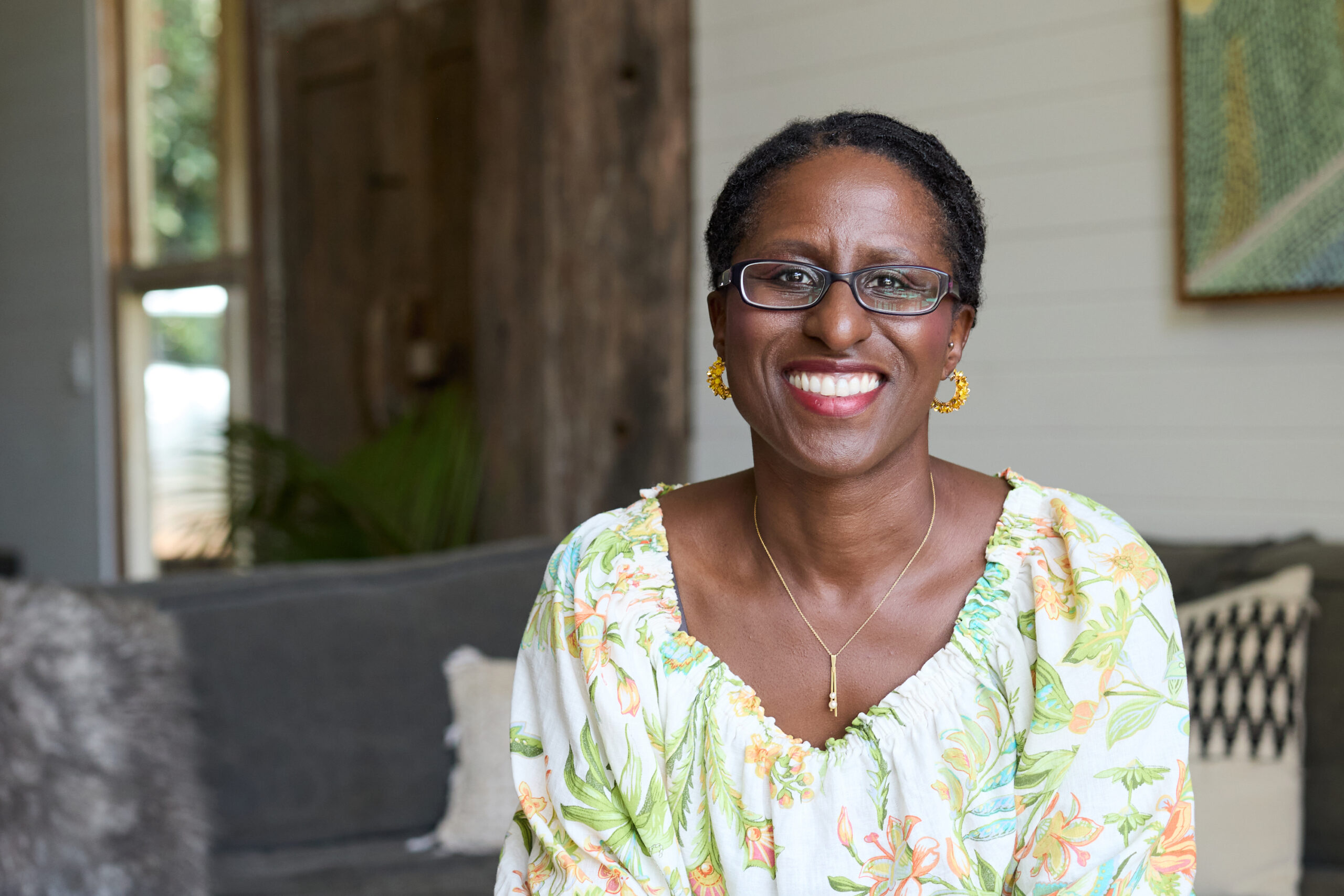
In today’s episode, we’re exploring how to turn just $5,000 into double-digit returns through real estate investments. Our guest is none other than Dionne Payn, founder of Women for Homes, a mission-driven movement helping 1 million women invest with impact and end homelessness by 2030.
Dionne isn’t just investing in property. She’s investing in people. With over $45 million raised for ethical real estate developments and 40+ investors earning double-digit returns, her journey is proof that you don’t need millions to make a difference. You just need a mission, community, and the right mindset.
This episode isn’t just about real estate it’s about reclaiming financial power, rewriting what wealth looks like, and investing with heart and strategy.
Acquania Escarne 0:00
Hey guys, welcome back to the Purpose of Money Podcast. I'm super excited because today we are with Dion Payne. She is amazing woman who founded women for homes, a company whose mission is to inspire 1 million women to invest $5,000 to end homelessness by 2030 she has 10 years of experience in the real estate and development space, and she's developed affordable housing projects, raised over $45 million on ethical property developments, and has helped 40 investors achieve double digit returns. She is going to tell us today how she did it, and also give us some insight into her number one best selling book, ethical property investing, and how she regularly writes about these topics and speaks on this so you can be empowered to invest.
Acquania Escarne 0:54
You are listening to the Purpose of Money podcast, a podcast where we talk about ways to build wealth and create more freedom in your life. Today, I am your host. Aquania Escarne.Welcome to the show. I'm so excited to have you. How are you doing today?
Dionne Payn 1:10
I'm doing really well. It's been a good day so far, and it's getting better all the time.
Acquania Escarne 1:15
Love it. I'm excited to have this conversation because you and I met through another person that I helped with their finances, and I'm so excited to have the ability to talk about your latest project, which I'm excited because it is global. It is going to have a global impact. So before we hop into all of that, I want to first talk about what was money like for you when you were growing up. This is a signature question I ask all my guests, but it's important to understand your relationship with money before we get into how you are making money.
Dionne Payn 1:50
Yeah. Look, that is a great question, and you're right. It's, it's kind of the foundation of of our money journey the whole way through, you know. So my money story when I was young. I'm the eldest of six kids born to Jamaican parents who had migrated to the UK. So money was tight. It was really tight. And I remember the experience of growing up and seeing all of my friends having stuff that I didn't have, and it was really uncomfortable. So that was, yeah, it was, I just found that really hard. And when I, you know, I always thought, you know, one day I'm going to have my own money and, you know, I'm not going to do this to my kids. And so, you know, moved to the other side of the world. I now live in Australia, and it's a beautiful place to live. So where I was living in the UK was, you know, sort of on the outer skirts of the city, kind of suburbia, but quite urban as well. And and, yeah, now we live in a beautiful rural setting. It's really green and lovely, and there's not that many people, and people aren't living on top of each other. So you know, all of the things that I, you know I had when I was growing up, and I've made sure that my kids don't have the same however, I don't have anything against the way that I grew up, or the values that I got when I was growing up, because they've been really important in shaping my journey so far. So I have a lot of gratitude for the sacrifices that my parents made to get me to where I am now. And all i All I want for my kids is that they get to build on on, you know, sort of what we've done, and just go into the world and be awesome humans, first of all, but also, you know, just know that all of those lies that we were told about money when I was told about money when I was growing up around money doesn't grow on trees, and it's really hard to get and you've gotta suffer to get money, and rich people are bad and all of that. It's just, you know, for them, they don't have that in their consciousness, which is something that I've worked really hard to to ensure for them.
Acquania Escarne 3:58
I Love that. I think that's such a good perspective, and especially you didn't mention it, but you did mention it like you're a first generation immigrant, right? Like my dad was born in Panama and then went to New York at six and had to learn how to live life in America, right? And my mom is straight out of Brooklyn, so I am like the first generation who raised fully in the United States, then had to, you know, get all the degrees, because my immigrant family, that's what they said, like, get an education, and then that'll lead to your your ability to get all this money. And I'm like, there are a lot of wealthy people who don't get an education, but I get what you're saying, right? So it that's another layer of pressure that, like we don't always talk about, but it's so real.
Dionne Payn 4:47
And that part where, you know, like my nan always used to say this, you've got to work harder than everybody else to be able to get an equal footing, and even then, you're not equal. Um, far out. That's i. I can just say, like, my whole life I've had this, like, you know, I've got to work hard, I've got to work hard, and I put so much pressure on myself, and I'm just sort of starting to see that now and going, okay, there's a better way to do this. Yeah,
Acquania Escarne 5:14
work work smarter, not harder, absolutely. So now that you are grown busy and books. Let's talk about what you're working on, because I am so intrigued by your passion to not only end homelessness right, but also make it at an affordable entry point that almost anyone can achieve right with the right help and support, you can come up with $5,000 at least. I know my people can. So tell me, how did you get to the point where this became the passionate goal that you want 1 million women to do, and why did you personally ever experience homelessness? How did this become such an important topic for you?
Dionne Payn 6:02
Wow, that's a great question. And I, like, in my head, I'm like, Okay, where do I start?
Speaker 1 6:06
So wherever you want.
Dionne Payn 6:10
It was good that you bought up. Actually, you know what my money story was as a as I was growing up, because that has been absolutely the guiding force to this. And I can see, I can see all the ways in what I do now that my, you know, how I grew up, helped so I was I've been really blessed. I've always had a stable place to live, and so that's never been an issue for me. I've never been homeless. But that part of, part of my, part of my story, is that my family are religious, and so along with all of those money stories that I gained, I also have this really strong service ethic as well. And I had connected that in my mind as to okay, you know, to be in service is to not have much money. That was, that was my connection. So I did all the right things. You know, listen to my Nan. I worked hard. I got a PhD, I got educated. And, you know, I loved, I loved what I did in terms of the PhD. I loved that journey. But when it came to the end, I got really disillusioned with academia. I had this perspective that it was something that actually it wasn't. I thought it was a job for life. It was going to be really secure, and it wasn't. And at that time, I was by the time I'd finished, I was child bearing age, and I just knew that if I really pursued that, and, you know, sort of put my career first, then I might delay having children, or not be able to have children at all. So I purposely had a break and just went, Okay, I'm going to have kids, and then I'm going to figure out the rest. So I had kids, and then, you know, the situation for me was that I wanted to live in a beautiful, rural setting. We were renting a house at the time, which was beautiful, and I wanted to be able to buy it, and it was actually up for sale, but we couldn't afford it because my husband was working, and we had one income, and I was having the kids.
Dionne Payn 8:00
So I just thought, if I can understand the game of money, if I can understand the game of property, then I can get to what I want. And I'm not afraid to do education. I'm a perpetual learner. So, you know, it's like, Okay, I'm going to learn how to do this development game. So that's what we did. We did a mentoring program with with with an educator, and got into our first property property development, which was really small. And the beautiful thing about that was that I learned we often have this, somebody has called it the illusion of limited resources. So if I don't have it, then it's not going to happen for me. Whereas with that, I remember the educator actually saying things like, you know, money is everywhere. And I'm like, is it? But we actually joined forces with somebody that had a lot of money, but didn't have the time to do development, and we had lots of time, but we didn't have the lots of money parts, so we joined forces. And so that was a really important lesson for me as well. It's like, you know, if you combine, if you pool resources, then you can get to what you want. So we did a few small developments, and that was fun, actually, because a lot less responsibility. And I didn't realize at the time, but in hindsight, I'm like, it was a lot less responsibility. We were just basically buying houses, subdividing them, renovating them, and then selling two separate either properties or land. And that was, that was a really great outcome. So we could have done that forever, but me being ambitious, I was like, right, let's go bigger. So I saw this case of land, and it it had development approval for 14 one bedroom townhouses. So about, this is about four projects in, and I thought, right, okay, I know how to do financial feasibilities. I can work this out. So I did, and brought on more partners, different partners this time, and we built 14, and they were for affordable housing. We worked with a community housing provider, which is basically some. An organization that provides low cost housing for people, and we work together again so that collaboration is like, okay, we can make this work. And at the end of that project, we made a good return, but we also had a big community benefit. So for me, that just ticked all the boxes in terms of, okay, I can be of service. I can provide affordable housing in an area where house prices are quite chunky, but also I can, I can be of service in the community and make a good return. So that was kind of aligning all of those different things.
Dionne Payn 10:32
And I was like, Yeah, I feel really fulfilled. Actually. The project itself was really stressful. It was, it was, it was good, but also there were some really hard points of it as well. So I it took me a long time to realize that actually development wasn't my path, but the capital raising aspect was and so that's when I started. I joined forces with a developer, and he had an awesome track record, over 30 years of experience, and he'd done heaps, so I raised capital for him. But right at the beginning, it was like, Okay, I want that experience again, in terms of, I want to, I want to be off service and also make money. So if you're doing affordable, sustainable, inclusive housing, I will raise for you any day of the week. And so that's how my company started high impact property investments. So that's, you know, been raising capital for other developers over this period of time, which has been great,
Acquania Escarne 11:23
All right, so that that's awesome. And I love the fact that you kind of figured out pretty quickly what you like to do and what you don't like to do, but still stay in your lane. I love when people can find ways to do what they're passionate about. But then also, you know that fills their need, their need to serve, their desire to help people and make an impact. So I love what you said. I'm really curious to understand what are some of the challenges that you experience in this space, because I've never really talked about development and in the US, we mostly think about apartment syndications and buying these subdivisions and then renting them out. And when we say affordable housing, it's normally housing subsidized by the government, and you're making sure you provide so many units where vouchers or anyone who's on some type of assistance program can live. But I liked what you said about you partner with an organization first, so they identify the people, and you provide the housing. But what are some other challenges that you face when you're doing these projects?
Dionne Payn 12:30
Yeah, look, there's lots of layers that I can talk from. So development itself, I just found it very we have a saying in Australia, blokey. You know, it was very male dominated, and that was difficult, because at that time, particularly that affordable housing project that I did, I just, I found, I felt that I lost myself a little bit. I sort of went away from my own values to try and fit into this world that, you know, you know sometimes when you feel that you don't belong, and you try harder. Like, I was definitely doing that, and I just got to the point where I was like, Oh, I don't even like myself for how I'm acting, and because that's, that's not the way I act. Developments because, because it is so, you know, it's so high risk, actually, and you've got to have everything aligned. You've gotta have everybody working on time, because if there's a time delay, then that costs money. And then, you know, if you're paying, you know, sort of you're paying a chunky interest rate on a large amount of money. Um, so the risk is really great. So I can understand why developers have this reputation of being really hard nosed. And, you know, just like, almost bullying, like you've got, you've just got to do this at this time. But that's not me. So that was, that was the biggest challenge that I had. And I think after, particularly after that project, the 14 townhouse project, I think I went into a depression. I didn't realize it at the time, but now looking back, it was just like, Oh, I'm so acting against myself that it just didn't make sense. So that that was a really big challenge. So if anybody is interested in doing development, I would say you've got to find a way to do it where you can be yourself. I didn't find it in that way, and I decided to change gears, which is great. And you know, I'm definitely on the right path, but yeah, just don't lose yourself in that process, because at the end of the day, you won't like yourself very much, and that's no good for anybody.
Acquania Escarne 14:27
That's so good. I appreciate the transparency and the vulnerability. It's not always easy for us as women to admit when we go through things, or even to recognize what it is, because we're taught to work hard and bear through it. And like you can do it, just stay strong. And sometimes you're like, No, this is not me, like something is not where it needs to be. And I'm glad that you found your way back to what does make you happy, but then also stay in this space. So. I really do like that. So tell us a little bit more specifically about women for homes and your mission to inspire 1 million women to invest $5,000 what is this project? What does that 5000 do? And what do you want the ultimate impact to be now?
Dionne Payn 15:20
Can you tell that this part makes me happy? And this, this wasn't where I started. So I was quite, you know, sort of trundling, along with high impact property investments, was getting some runs on the board. And then at the end of last year, so November 2024, I went to a retreat, and it was a personal branding and marketing retreat. And I didn't even really know I was there. I kind of went because I liked the lady who was running it. And, you know, we'd done a little bit of work before, but I was like, Oh, this is a bit of a jolly. I don't know if I need to do this and, but, you know, there was the sort of intuition was, you know, go, is going to be really good for you. I had no idea how good it was going to be. So we went and, you know, like, you know, personal development as part of this, this process. But also because the lady, and her name is Pru and Pru Aja Steadman, so anybody that needs branding photos done, go look for her, because she's awesome. Um, but yeah, so, so she just created this really lovely container where 12 women came together. We were nourished like food wise, we're in this beautiful location. We were doing some personal development work and really looking at, well, what's, what's our motivation? And then at the end of it, she did our headshots. So I got some really amazing headshots. But that was probably the biggest reason that I was there, actually, because I was there, actually because I was like, I'm going to get some amazing shots. But what I also got out of it was just this real inspiration to do, do more, go bigger. And I remember sitting there and just going, I don't know how I can go bigger on this. But all the way through that retreat, women were coming up to me and saying, Love, what you do? We really want to get involved. How can we do that? And I just knew that they, you know, that minimum investments, through high impact property investments, is $50,000 and I knew that not all of them would be at that stage. And it kind of really niggled me after the event. And I just, you know, sort of again, that intuition, it was like, Okay, I need to, I need to make this investing more accessible, and I've always had this thing.
Dionne Payn 17:23
Part of the reason that I wrote the book as well, which I'll show you here. I know it's backwards, but it says, I think we're probably investing and the busy professionals guide to double digit returns through affordable and sustainable homes. So that was my experience of getting double digit returns through creating affordable housing. And so I really wanted to share that. And I do have this belief that if we're going to solve this chunky problem called homelessness, and we need to do it in a way where it's a win, win, win. So you know, people that are investing and getting good return, people that are ending up with the homes, are being given beautiful homes that they feel comfortable with at a price that they can afford and that, you know, sort of the general society benefits, it has to be that win, win win, because if there's a win lose in that frame anywhere, and then it just doesn't work. And that's why, you know, people get so caught up in, oh, I don't want affordable housing, because it might create a ghetto, and then my house price is going to go down. So unless we create that win win win, like I said, it's just not going to work. So that was something that was important to me, and that just kept nagging me at the end of this retreat, because I was like, I'm not actually creating the Win Win win here. I'm creating, I'm creating partly wins. But you know, there's a whole group of people that could benefit from this and do deserve to achieve double digit returns and can be part of the solution. So I was really motivated for that. So this kind of real intuitive hit was a need to create something that's way more accessible that anybody could be a part of. So that was where women for homes was born. And when I felt into well, you know, what do I want to do? And it was just like, just work with women. Now, I'm not a man hater. It's not about that, but there are a certain set of circumstances and some systemic barriers that are causing an increase in women at risk of homelessness, and I really wanted to address that. So with women for homes, there's obviously, there's the investment. And yes, you can invest $5,000 and we invest into projects that increase the supply of affordable housing. But also, this is my I love this part, and I started a podcast called financially empowered women, because when I looked at I was doing my business plan, and I was looking at, well, why are women ending up homeless in the first place? And you've got the gender pay gap. And what's interesting is that everybody starts off, male and female, start off at the same sort of pay when they come out of college or when they start their working career, but then there's a widening gap over time, and so things like taking time out of the workforce to have. Children, then that means that you've got less savings to put into superannuation, which then means that your retirement, you know, spot, is less, and then you throw in a divorce or a separation, and then that's why women are ending up at risk of homelessness, because the amount of money that they've got to retire on is much less than if they'd not taken any time out of the workforce at all.
Dionne Payn 20:23
So I looked at that and just thought, well, I can't just have this, you know, come and invest in this if I don't address this first. And that was where the financially empowered women podcast came in. And I knew that I did not have the skills to be talking about how to help women be financially empowered. I can talk about the investment part, but there's so much to it. It's like, how do you negotiate a better career? How do you manage your super How do you super animation? How do you, you know, like, what happens when you separate How do you ensure that the assets are distributed fairly and that everybody's looked after? So yeah, so I get to talk to these really amazing women, and I know that you're going to be on the podcast at one point as well. So it was great, um, but yeah. And I just, it's just this thing about working with women. It's not that all humans don't have the same challenges, but the system is very definitely geared towards or away from women at the moment. So I just see it as a level playing field. And you know, part of that, part of my journey as a first generation Jamaican, UK immigrant, I've sort of witnessed the effect that inequality has on people and on societies. And I just think, you know, housing is one of those things that is a basic human right. If we can have equality in housing, then we've got a platform to be able to have equality everywhere. So, you know, there's, there's so many people that are disadvantaged, like single, single parents with with children, older, single women, young people starting out and trying to buy homes. You know, so many people have been disadvantaged, and so if we can get the housing piece right, there's, there's definitely more to do, but let's get the housing piece right. That's where my passion is, that's where I can help, that's where I can contribute. So that's, that's really my motivation. So that was a really long answer. Have I covered everything?
Acquania Escarne 22:18
Yeah, it's okay. You did cover everything. So basically, just to recap, for those who are following with us and just tuning in, women for homes, is a platform that you're making investing in the mission to end homelessness easier, and you're allowing the threshold to get in to be as low as $5,000 now are we able to support you right now? Is the website ready to go? Is the fun ready to receive? Let me know all the details, because, you know, I'm always looking for my next investment. Yes.
Dionne Payn 22:53
So it's not quite ready to go, but within the next week, it will be ready to go, so I'll be able to share the details with you then. And we're starting really small. Actually. We're starting with a syndicate, syndicate lending platform. And the reason for that is that it just gets us started, it gets some runs on the board, and then we can roll into a retail fund later on. And so, yeah, that that's going to be ready in the next week. We've got a project. Yeah, we've got a project that's that's ready to go, and part of my motivation for all of this is to make it as safe as possible for people to get involved, because we have a TV show over here called the current affair, and it's one of those kind of expose things. I'm like, I never want to end up on that.
Acquania Escarne 23:38
No, none of us do. But okay, so let's dive deeper. For those who may not be familiar with you, call it syndicate lending, right? Is that the term? So what exactly is syndicate lending, and how does it work? Yeah, cool.
Dionne Payn 23:56
So the banks do this all the time, so to split the risk of a of lending money to an organization, they will come together. They will bring other banks together and say, Okay, well, we'll put in this much. You put in this much until they get to the amount of money that that organization needs, and then they lend the money. So we're just doing what the banks are doing, but on a smaller scale. So the banks would not be faffing around with $5,000 and but, but we are because it's that thing of making it accessible. So I'll tell you about this first project as well. So it's a it's a housing cooperative, which is quite a different way of developing homes, but it's run by a charity, and it's making housing affordable. Now. They've got a, basically a retirement village that they're doing. So there's 25 homes. It's not, it's not, it's not the same as a retirement village that, you know, the sort of typical ones. And but basically, people get to purchase into the home. The charity owns the land, but the the occupants own the home. And and. It's really fair. So people that can pay more do people that can't pay as much pay what they can, but the facilities are a shared the decision making is equal. So it doesn't matter even if somebody's putting more money than somebody else, the decision making is equal.
Dionne Payn 25:17
Doesn't matter if somebody owns the home or somebody's renting. The decision making is equal, and it's really about building community, reducing loneliness, because that's one of the key things about, you know, sort of getting older, is like your circle becomes narrower, and therefore, you know, loneliness increases. And that's a really big epidemic that's on the rise. And so loneliness has overcome the sharing of resources, which is beautiful because, you know, like, it's so funny when I see, you know, like, lots of houses really close together, and they've all got their lawn mowers and, you know, they've all got, like, all their all their bits, where, if they came together as a community and went, Okay, well, we'll share the use of this, and we'll share the maintenance of this, and then we can come together. So this is basically what they're doing in this housing cooperative. And I just think it's really beautiful. So when I was approached to help them raise I was like, absolutely. And part of the part of the safety of this is that there's a philanthropic organization that's involved as well. So they're lending a larger chunk of the money, and we're just lending the top up funds for them. So it's actually the philanthropic capital that takes the heat. We call that first loss capital, and our capital is protected. And there's a whole mechanism behind it, which I've got a I'm putting together the information now, which we'll talk about, that mechanism, and lawyers, trust accounts and all of that. So I've just tried to make it as safe as possible, as low risk as possible, but as accessible as possible.
Acquania Escarne 26:46
I love that. I love that. Now, please understand, guys, this is not risk free on guaranteed returns money, but it is definitely one where she's done her due diligence to make sure that the money raised goes to the causes that she's telling you they're going to and that you're able to see that return come back to you when the project is complete. Yes.
Dionne Payn 27:07
So this first project, the target return on this is 10% per annum, and the length of time that the money was required for is 12 months.
Acquania Escarne 27:16
Excellent. So short term investment, which is really hard to come by when you think about the real estate space, unless you are fixing and flipping and then you're also allowing this lower buy in but a good return on money in 12 months. So I love to hear all of that. We'll definitely share the link to your website and how people can connect with you in our show notes. But the name of the show is called The Purpose of Money. And I ask all of my guests, what is their purpose for money? So what's yours?
Dionne Payn 27:50
You know, I recently uncovered a sort of limiting belief that I had, and, you know, we're talking like in the last two weeks, and the limited, limiting belief was, God loves people who suffer. So this is a hangover from my, you know, religious childhood days and, you know, so bringing that up was like, what? I didn't see that one coming. I don't even know why I'm mentioning that, but I just, I just have this new awareness now of the purpose of money is to be recycled and make everybody's life better. So that doesn't exclude me. Um, it's definitely about making my life better and being abundant. Um, just means that I can help more people. And actually, the greatest joy of my life is helping more people. So yeah, that's that's the purpose,
Acquania Escarne 28:46
Good answer. That's a that's a good purpose for your money. That's a great answer. And you are walking out that in your life by what you're doing here. And now, I am so grateful. Thank you so much for being on the show today. Guys, if you are interested, please make sure to check out the notes and also check out her number one best selling book, ethical property investing. I know that I am, and I'll make sure to include links so you guys can connect. You guys know what to do until next time, keep building generational wealth.
Acquania Escarne 29:23
Thank you for listening to The Purpose of Money podcast. For more resources and information, check out my website, thepurposeofmoney.com and while you're there, please sign up for our newsletter so you'll have all the latest information on new episodes and blog posts until next time keep building generational wealth.
Transcribed by https://otter.ai
In this episode, you will learn:
- How Dion went from academia to real estate development and capital raising
- The unique mission behind Women for Homes and how you can be part of it
- What ethical property investing really means and how it’s changing lives
- Why $5,000 is enough to start making an impact in real estate
- The power of partnership and pooling resources to access real estate deals
- How to structure deals that are low-risk, high-impact, and community-driven
- How to position your project to attract philanthropic partners who shoulder the most risk
And so much more!
Get your hand on her book – E.T.H.C.A.L Property Investing: The Busy Professionals Guide To Double Digit Returns From Affordable And Sustainable Homes
Click the link below to watch it on YouTube.
Check out this additional content about finance from The Purpose of Money!
- Navigating Wealth & Relationships with Bob Grant
- How to Build a Vacation Home Empire with Crystina Cardozo
- How to Make Profit First in Your Business with Rocky Lalvani
- How to Raise $48M for a Startup with Ariana Pareja
- How to Get the Funding You Need to Grow Your Business with Corey L. Barbour
Follow Dionne Payn on Social Media
Follow The Purpose of Money on Social Media
More Places to Listen to The Purpose of Money Podcast
- Apple Podcasts
- Google Podcasts
- Pandora
- Spotify
- iHeartRadio
- Podbean
- Castbox
- Podbay
- Overcast FM
- Tune In
Do you have specific topics you want to hear on The Purpose of Money Podcast? Or would you like to be a guest? Let’s connect! Email info@thepurposeofmoney.com to discuss more.